
Play it Loud at The MET

“Loud is more than sound, it is an attitude”
This was a quote that was mentioned in the manifesto presenting the Play it Loud exhibition at the Metropolitan Museum of Art. The MET has been very creative in curating exhibitions that relate to music such as their Punk Rock Exhibition back in 2013. With assistance from the Rock N Roll Hall of Fame, Play it Loud is a phenomenal exhibition celebrating the sound, legacy and attitude of Rock N’ Roll by curating what seems to be a labyrinth of music gear and instruments from artists who practically defined the genre, from its sound, imagery and life style. From the signature Ludwig Drumkit of Ringo Starr, to the fierce hard and heavy Gibson of Angus Young of ACDC, to the brutal Warlock guitar of Max Cavalera, we were able to see that it is not just the warriors of rock we see on stage, but also the weapons in which they carry.
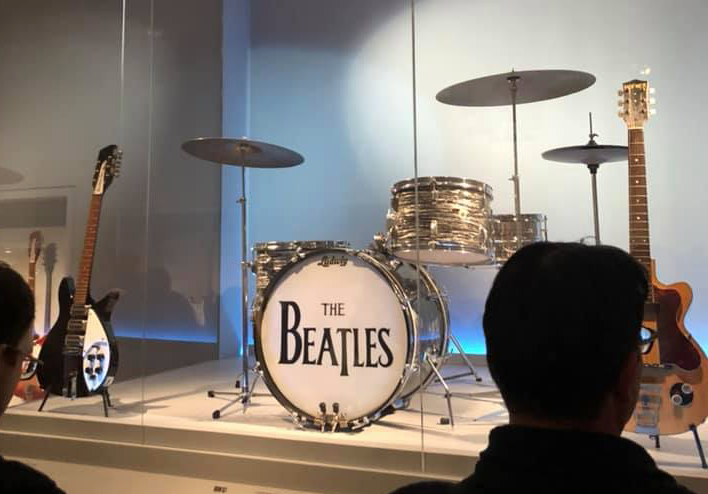
While it was curated to be an exhibition style with having the instruments mounted on the wall or in glass casings, the exhibition itself was pretty interactive. One thing that I found to be intriguing outside of the exhibition itself was the people attending this show. This event attracted lovers of art, lovers of music, and of course tourists. In my years of attending art school and going to galleries in Chelsea, Lower East Side and Bushwik, I have never seen such a diverse amount of people attending a show and everyone interacting with it just as much. Some people were intrigued by the layout and the way the exhibit was curated, some people were just there to get a picture with their favorite guitarists rig, while some people just happened to stumble into it after looking at the Greek Sculptures. In the end, this was an art show open to all ages, tastes, interpretations and experiences.
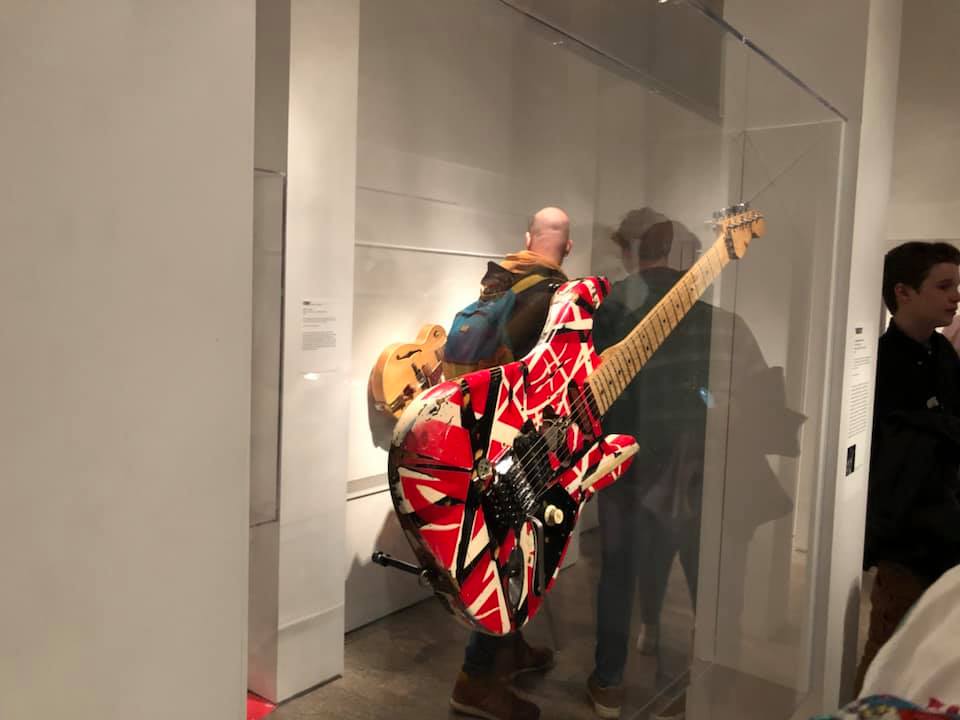
With guitars laying all around the walls, from the signature striped guitar of Eddie Van Halen, to the black Gibson of Angus Young, to the smashed strat of Kurt Cobain, you were able to see that the guitar didn’t just have an effect on these artists sounds, you were able to see that it was an extension of themselves. In the end, yes, it was the skills of Jimmy Page that gave us great solos such as Stairway to Heaven, but in the end, the guitar supported the guitarist as much as the guitarist made it sound great.
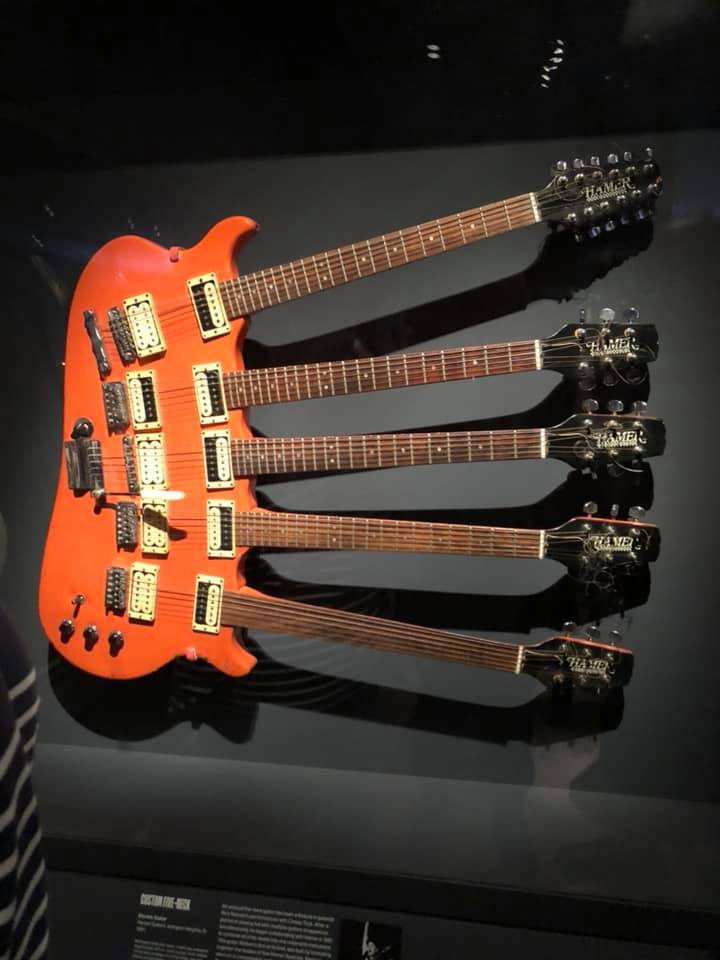
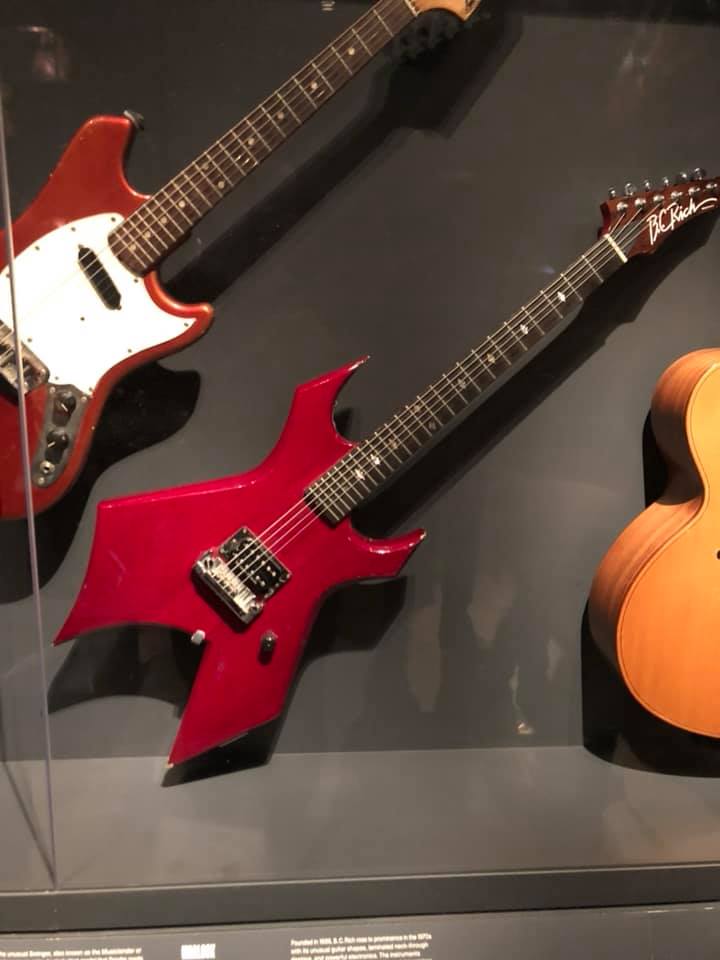
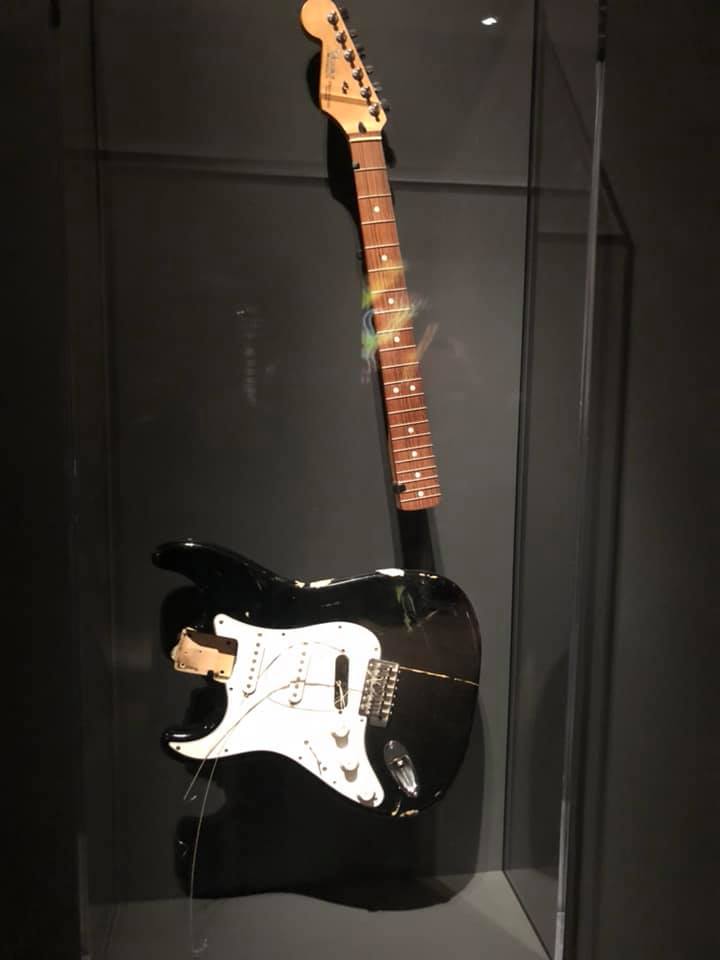
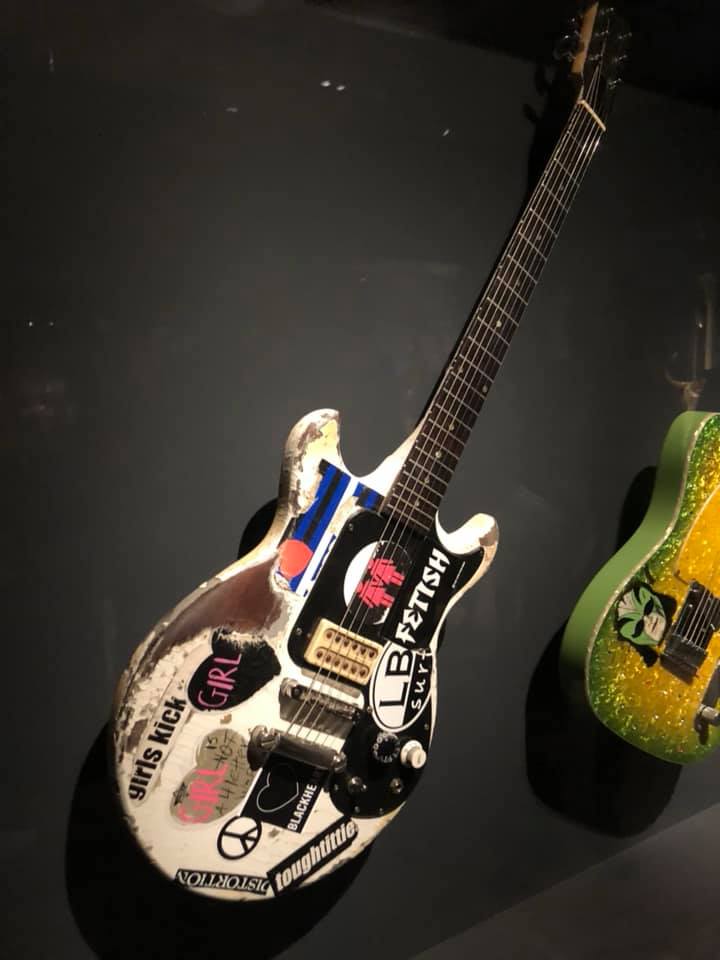
As someone who attends hundreds of concerts every year, unless someone is a complete gear nerd, their main focus is on the sonic and visual presence of the musician themselves. They are interested in how they interact with the crowd, stage presence, execution of the songs live, production and just about anything else that doesn’t pertain to the setting of their amps or tuning of their strings. This time, we were able to see the extension of these artists stand on their own. The way that these guitars shined in your face and how they were presented had just as much attitude and presence as the musicians that played them.
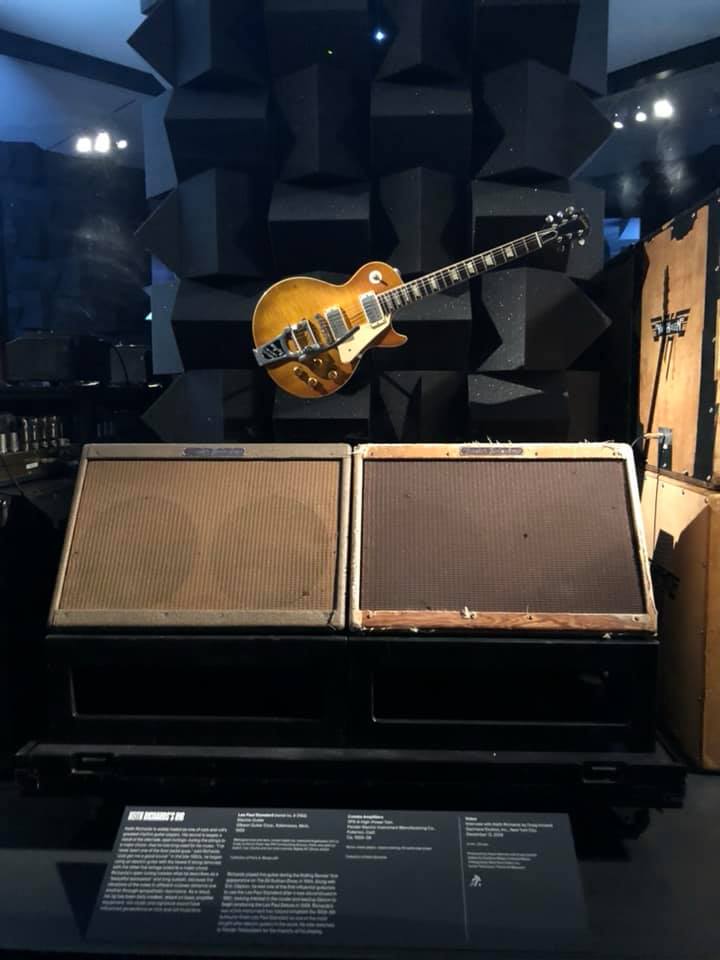
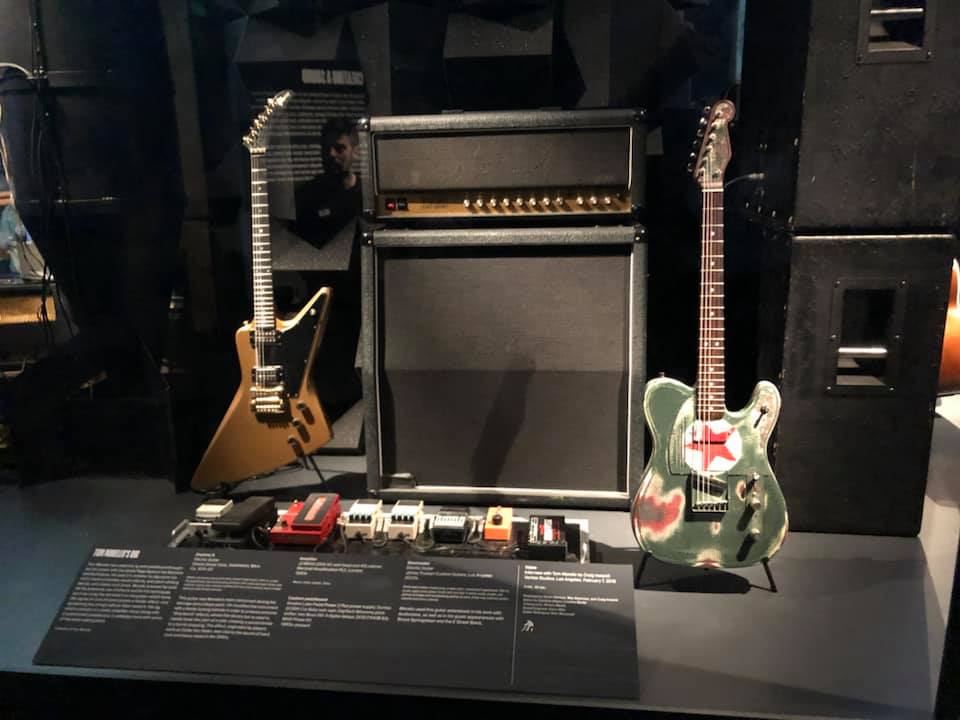
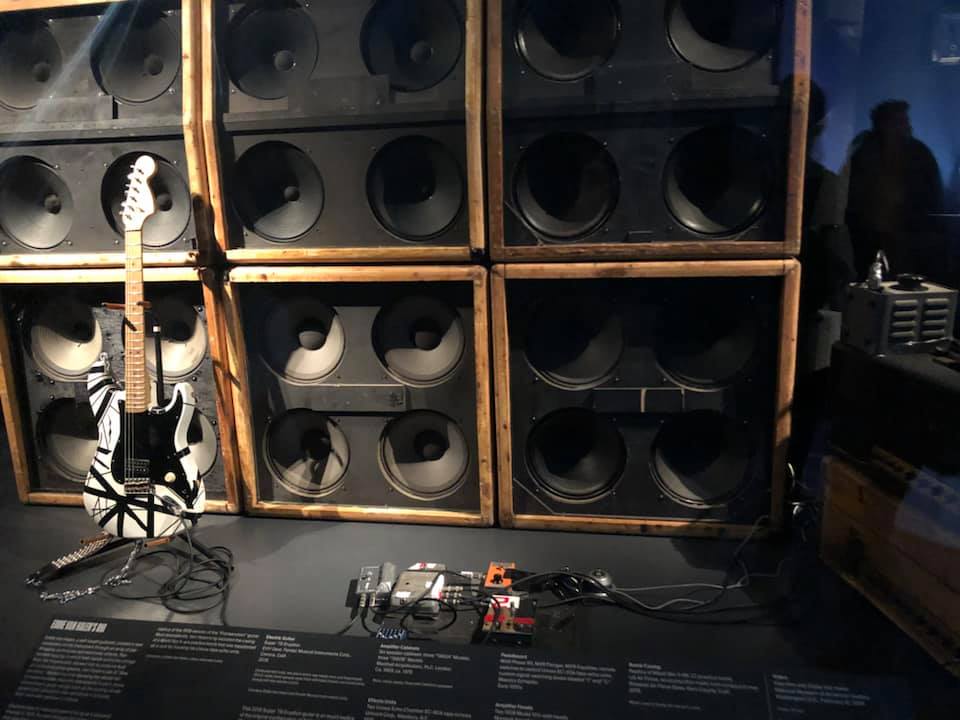
We get to another room where there was the rigs set up for 4 different guitarists who helped shape sounds of rock and how to execute them. We had the rigs of Tom Morello of Rage Against the Machine and Audioslave, Keith Richards of the Rolling Stones, Jimmy Page of Led Zeppelin and Eddie Van Halen. By having their rigs set up, and TV screens presenting on how the execute their signature sounds, it almost felt like we were in a guitar clinic or at a booth at Namm as much as we were in an art exhibit. While this room was crowded, it was dark and easy to focus on these artist’s presentations and it felt like a personal guitar lesson.

This exhibition also featured old school equipment we would see in studios before we had the gift of multi-track recording, synthesizers and just about anything digital. By having displayed old school equipment, we were able just how complicated making an album could have been back then. It showed us a piece of history, or what one could refer to as “musical artifacts”.
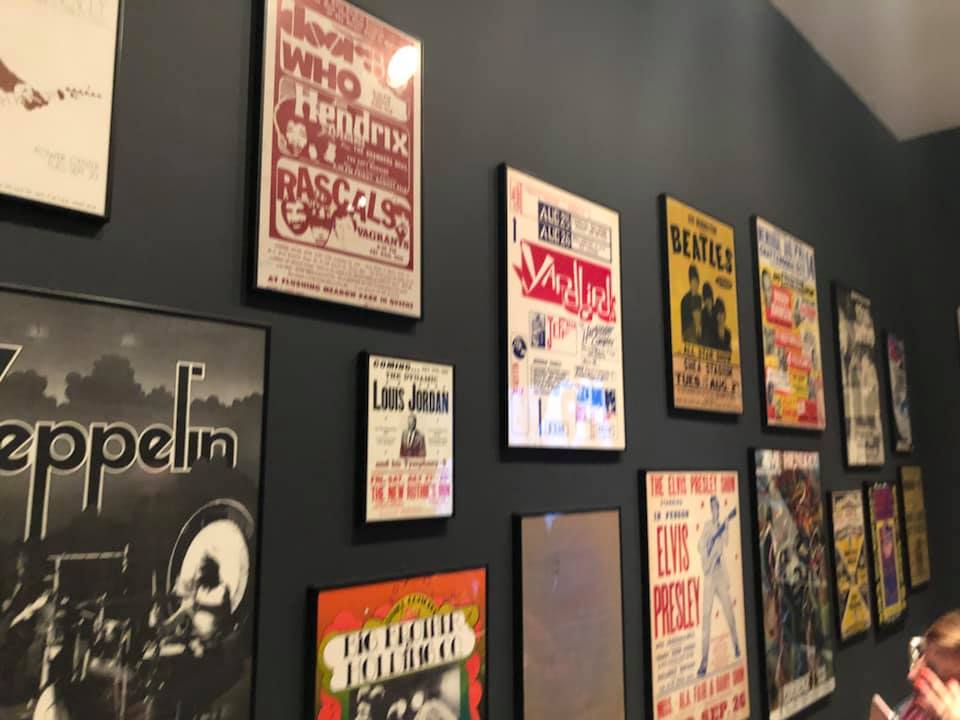
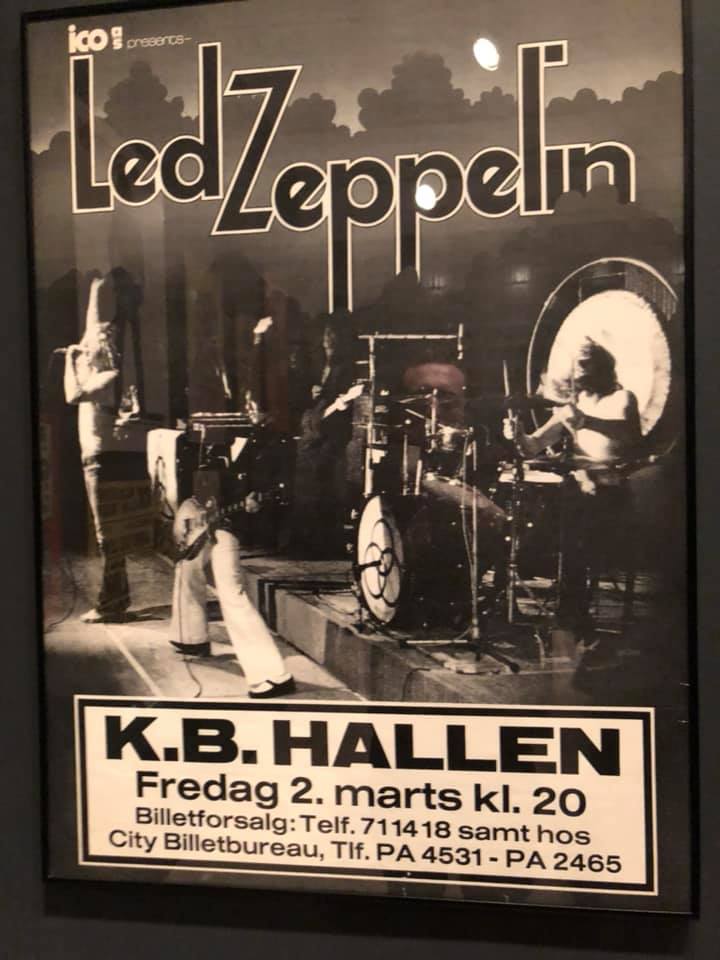
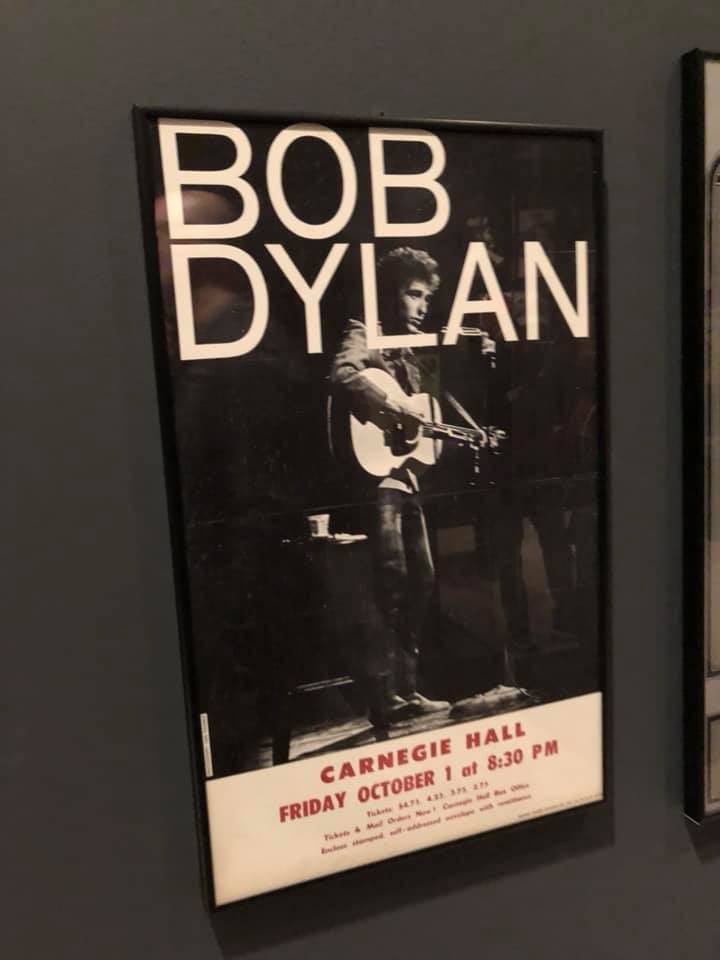
The Exhibition ended with the tour flyers of concerts back in the day. Would you believe that it would only cost $4.50 to see The Rolling Stones back in the day?! You really get a feel on how time has changed and evolved and how music went along with it.
In the end, we were able to not see just the gear of these artists and how to execute their sounds, but we are able to see how this equipment is a part of them. We are able to see how it is an extension of themselves and how while they have the talent to just pick up any instrument and play, but how their presentation is just as important. Jimmy Page can probably pick up a cheap beginner strat and still make it sound amazing, but it wouldn’t be the same without that signature Gibson we all know and love. As the manifesto of this exhibition states, “Loud is an attitude”. The way this gear was curated and presented showed that it isn’t just the musician with this attitude, but it is the gear that they use to execute this sound. I cant picture Tom Morello playing a guitar without a large amount of pedals on the floor, I cannot picture Kurt Cobain playing a guitar and having it remain in one piece, or Eddie Van Halen without those stripes running along the body. In the end, we were not seeing just pieces of Rock History, we were seeing parts of artists that made them who they are and what helped them create the sound we all know and love.
The Play it Loud Exhibition is on view at the MET in Gallery 199



Leave a Reply